Republic of Tunisia
Ministry of Tourism
Select your language




The National Union of Traditional Industries (NUTI) is a professional organization affiliated with the Tunisian Union of Industry, Trade, and Traditional Industries, which is a union of employers and includes sectoral and regional trade union structures chosen from several institutions.
The NUTI represents the sector of traditional industries and crafts in Tunisia and currently includes 15 national trade chambers representing the most widespread specialties of traditional industries, ranging from traditional textiles to stone carving.
The tasks of the National Union of Traditional Industries include:
- Representing workers, producers, and traders in the sector of traditional industries in defending their professional, economic, and social interests.
- Keeping records of craftsmen and craft institutions in the sector of traditional industries and developing support programs for them.
- Contributing to the development of specifications for traditional industry products.
- Conducting relevant studies and research on the sector's activities.
- Contributing to the development and implementation of training and qualification programs in the field of traditional industries.
According to Decree No. 2122 of 2005, as amended by Decree No. 2864 of 2008, which defines the responsibilities of the Ministry of Tourism, the Ministry is entrusted with the following general tasks in implementing the state's policy in the fields of tourism and tourist entertainment:
- Conducting studies and research related to tourism and tourist entertainment.
- Proposing legislative and regulatory texts in its areas of activity and ensuring their implementation.
- Regulating programs and projects to be implemented within the framework of the plan, as well as supporting measures, and submitting them for government approval.
- Implementing government decisions related to tourism and tourist entertainment, directly or through the structures, institutions, and public facilities under the Ministry's supervision.
In the field of tourism, the Ministry of Tourism is specifically responsible for the following:
- Designing programs and measures aimed at developing and promoting tourism.
- Regulating and implementing the state's policy in terms of tourism development and enhancing the competitiveness of the tourism product.
- Conducting necessary studies for the development and enhancement of the tourism sector.
- Guiding and monitoring investments in the tourism sector and overseeing projects.
- Developing infrastructure and facilities in tourism-oriented areas.
- Analyzing the tourism situation and monitoring its developments at the national and international levels.
- Preparing legislative and regulatory texts governing tourism activities and ensuring their implementation.
- Monitoring the quality of tourism products and services, and implementing quality plans and classification standards.
- Establishing conditions for practicing tourism activities.
- Studying vocational training programs and approving them, as well as ensuring their implementation in collaboration with relevant bodies.
In the field of tourist entertainment, the Ministry of Tourism is specifically responsible for the following:
- Participating in the development and implementation of general guidelines for tourist entertainment.
- Promoting investment in the field of tourist entertainment.
- Coordinating with relevant bodies regarding measures aimed at developing tourist entertainment.
The Ministry of Tourism is consulted on matters related to its field of activity and is represented in all structures related to its responsibilities.
The Ministry of Tourism is responsible for developing international cooperation programs and supporting relations with international and regional organizations concerned with matters within its jurisdiction.
The Ministry of Tourism supervises the structures, facilities, and public institutions under its purview in accordance with applicable regulations.
The National Office of Traditional Industries, established by Law No. 133 of 1959 dated October 14, 1959, has been entrusted with the following tasks:
- Directly or indirectly utilizing the production facilities established or to be established by the Office itself or through its intervention.
- Conducting technical monitoring of industrial companies in the field of traditional industries and export-oriented products.
- Assisting in promoting the production of traditional industries, particularly through the training and improvement of skilled and professional workforce, as well as disseminating and marketing their products in the domestic and international markets.
- Engaging in trade, both for its own benefit and for the benefit of others, in traditional industry products.
- Taking or requesting all necessary measures aimed at protecting, improving, and developing Tunisian traditional industries.
Significant decisions of ministerial councils include:
- In 1990, the restructuring of the National Office of Traditional Industries was approved, which involved transferring the production apparatus to an independent subsidiary entity called "Production Company for Traditional Industries (SOPART)" and the promotional tasks to another independent subsidiary called "Company for the Promotion of Traditional Industry Products (SOCOPA)." Both entities were liquidated in 1996 and 2005, respectively.
- In 1997, the training apparatus (professional skills, spaces, and equipment) was transferred to the Ministry of Vocational Training and Employment, which assumed the responsibility of training in the sector through the Tunisian Agency for Vocational Training.
- In 2009, the mechanism for revolving capital loans assigned to the Office by virtue of the 1988 Finance Law was transferred to the Tunisian Solidarity Bank.
As a result of the restructuring of the Office and the decisions of the ministerial councils that affected its activities, the Office is now responsible for the following tasks:
- Enhancing the skills of the workforce in the sector.
- Developing investment and promoting job creation in the sector, as well as supporting the development of craft institutions.
- Promoting research and innovation.
- Developing products and enhancing marketing.
- Establishing quality systems in the sector and conducting technical monitoring of production and marketing channels.
- Promoting information and communication systems in the sector.
- Conducting technical, economic, and social studies that contribute to the advancement of the sector.
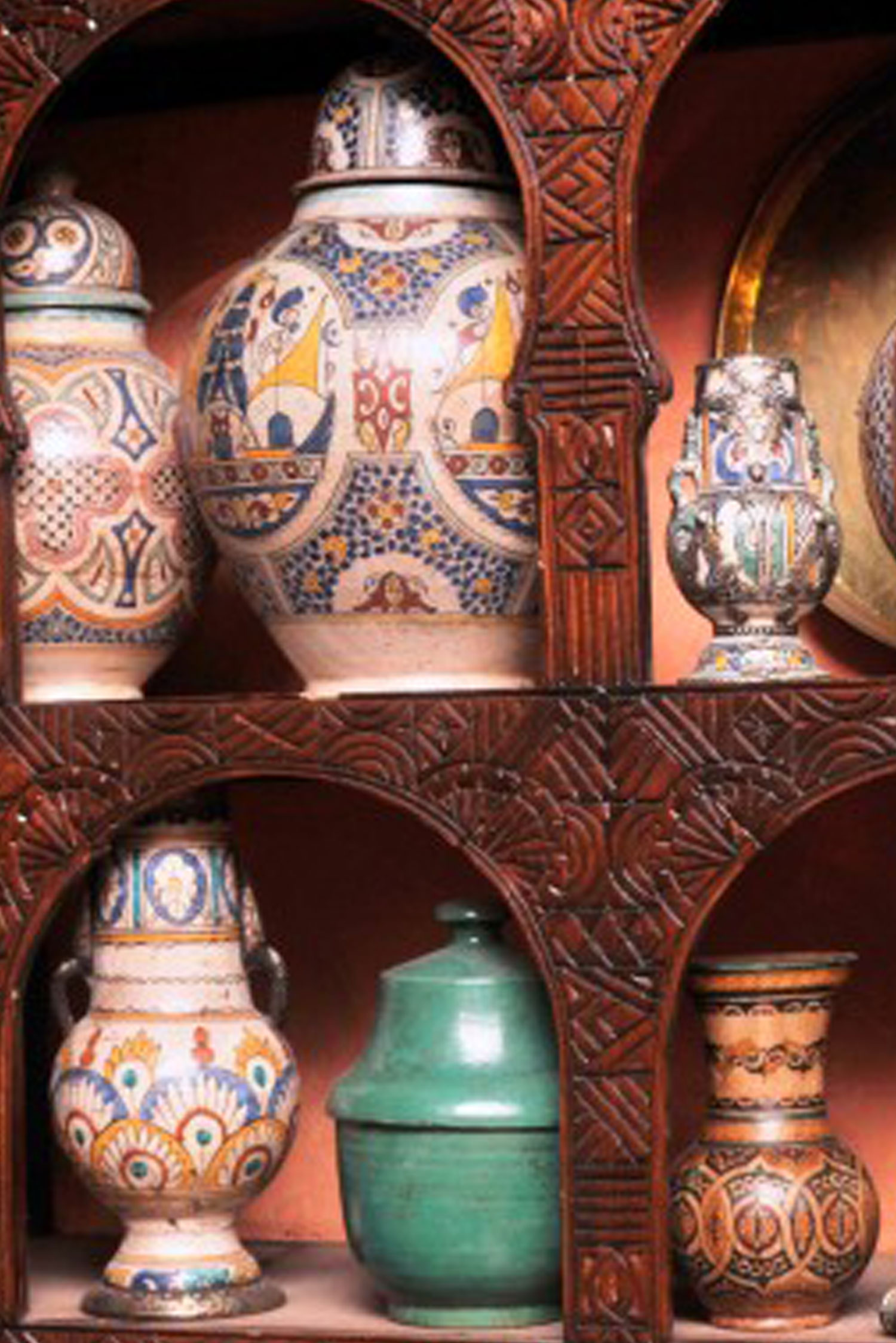
Accumulated traditions, manual skills, and creative intelligence—all these qualities converge and blend in the products of traditional industries.
Traditional products that have been influenced by cultural values and constant civilizational additions, whether functional or decorative, traditional or contemporary, have a significant presence in daily life.
Reviewing and updating the materials, techniques, and forms of traditional products have been an ongoing effort by innovative artisans. This is to ensure that traditional industries maintain their position in interior design, decoration, furnishings, and household complements.
The heritage innovations inspired by new visions are nothing but an expression of the material culture of Tunisians. They represent an important and extended part that aligns with the new needs of heritage.
Tunisian traditional industries have managed to navigate their way between tradition and modernity, advancing their progress through state support in terms of preservation, renewal, and development of an industry that is rich in creativity and innovation.
The traditional industries sector provides 300 direct job opportunities and contributes 4% to the gross domestic product, with annual exports from the sector valued at 380 million dinars.
The activities of small crafts and traditional industries are regulated by Law No. 3078 of 2005, dated November 29, 2005, which lists the activities of small crafts and traditional industries.
Establishment of the Center
The Technical Center for Innovation, Renewal, and Support in Embroidery and Weaving was established by a decision of the Minister of Trade and Traditional Industries on February 14, 2007. It is a legal entity of public economic interest, enjoying civil personality and financial independence, and is under the supervision of the Minister of Trade and Traditional Industries.
List of Textile Crafts:
- Handmade fabric
- Hand spinning
- Traditional dyeing
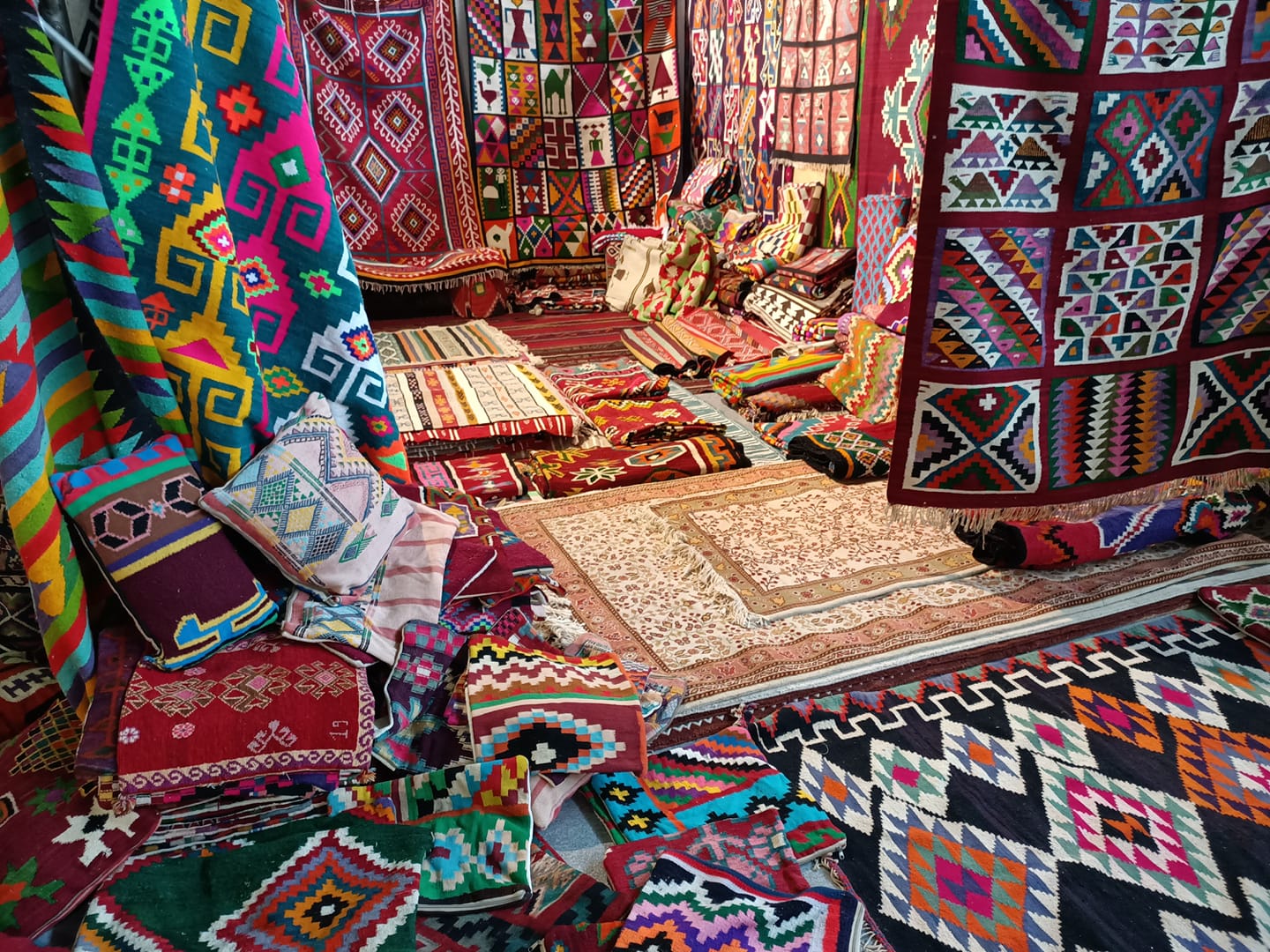
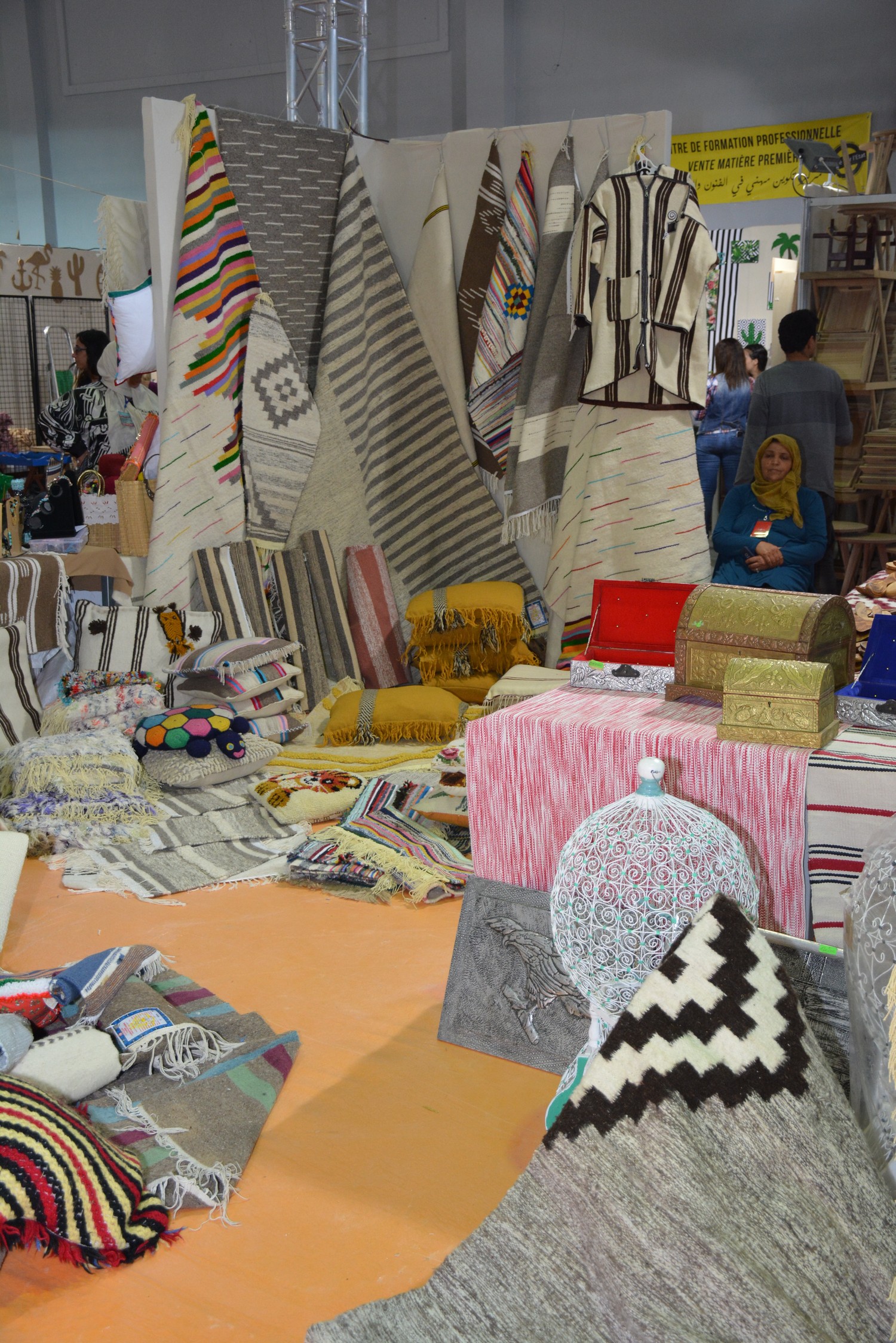
- Textile furnishings (Zarbeya, Kilim, M'rakoum, Gharara, Qatif)
- Wall textiles
- Woolen blankets
General Tasks:
- Encouraging innovation and renewal while preserving national authenticity and heritage.
- Supporting artisans and assisting them in developing work methods, improving the quality and diversification of raw materials, controlling their costs, and conducting advertising and media campaigns to promote innovative products and help artisans exploit and market them, including organizing annual workshops.
- Encouraging the use of natural raw materials and environmentally friendly techniques that preserve the sustainability of natural materials.
- Incubating new projects and providing support throughout all stages of project creation.
- Establishing partnership programs with institutions of higher education and vocational training centers through contracts to ensure scientific and technological vigilance in the sector, including conducting studies, research, and documentation in their respective fields of specialization in coordination with relevant bodies.
- Assessing national resources of natural raw materials that can be used in traditional industries.
- Collecting information on sub-sectors, acting as a reference and analyzing them.
- Developing and enhancing craftsmanship skills and competencies.
Specific Tasks:
- Providing technical, industrial, and commercial information, as well as all relevant statistics and preparing technical studies related to embroidery and weaving activities.
- Contributing to the utilization of all national resources of raw materials used in the field in collaboration with relevant institutions.
- Supporting artisans, craft establishments, and specialized associations by providing necessary assistance to streamline work methods, improve equipment, enhance techniques, and elevate quality.
- Participating in the development of technical standards and specifications and supporting artisans, craft establishments, and specialized associations in implementing them.
- Coordinating with support and assistance structures, organizations, associations, Tunisian and foreign higher education institutions for the exchange of experiences and information, with the aim of developing the sector, promoting scientific research, and innovation in the field.
- Coordinating with specialized vocational training centers to develop work methods, introduce new techniques in training and production, and develop competencies and skills.
- Conducting all necessary testing and analysis operations for materials and products.