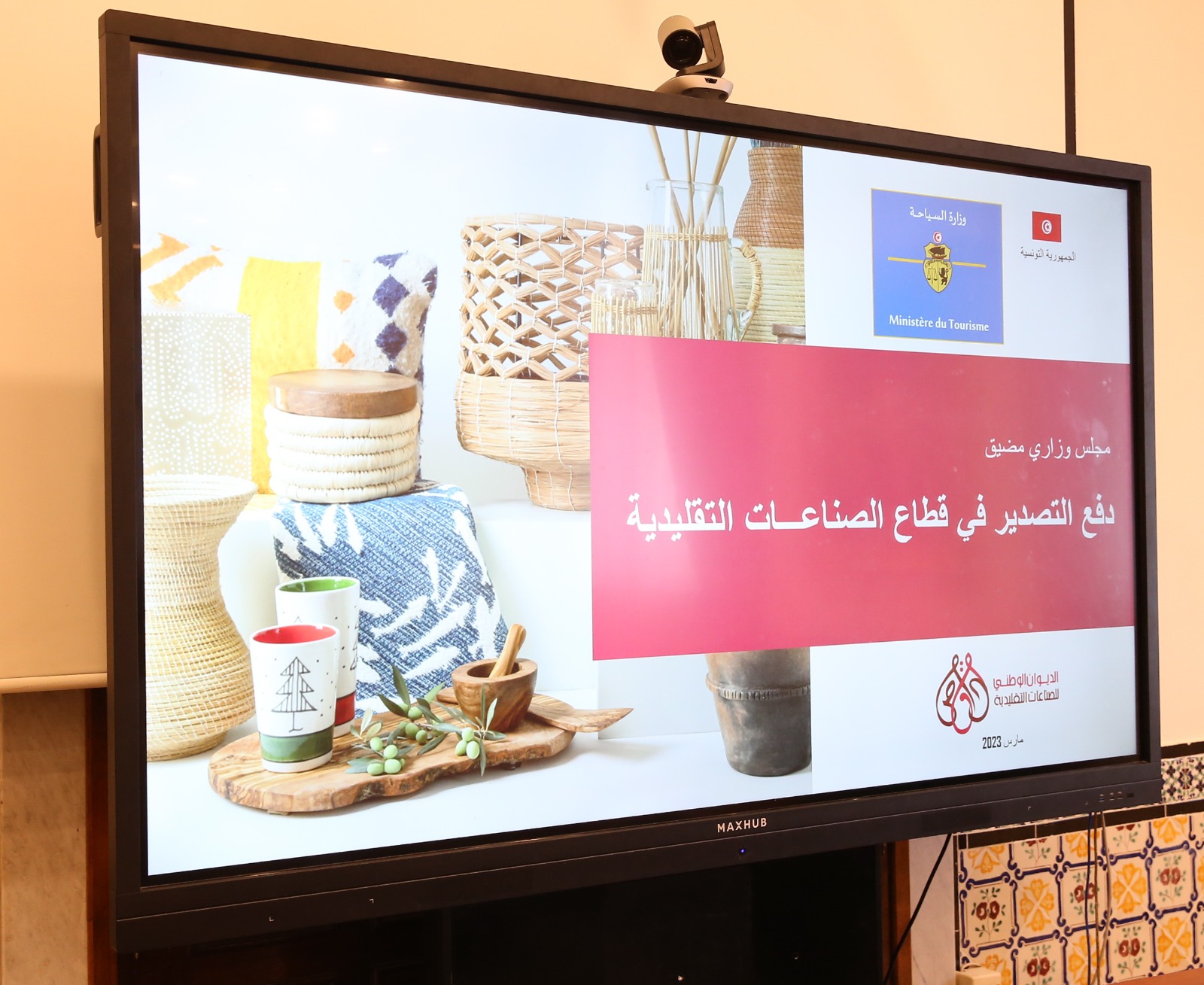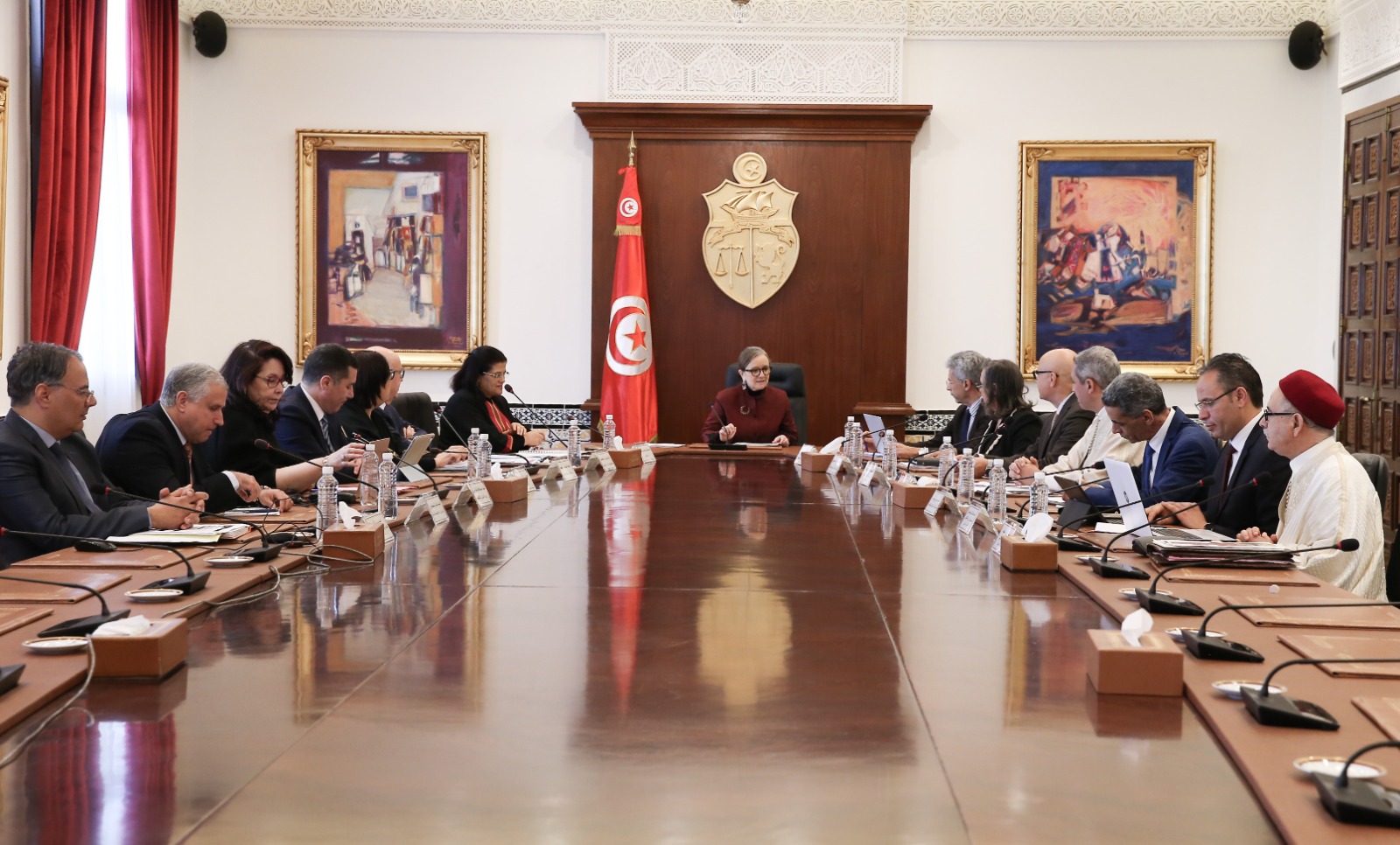



Within the framework of the celebration of the National Day of Handicrafts and National Dress, which falls on the 16th of March of each year, Prime Minister Naglaa Boudin Ramadan supervised this morning at the Government Palace in the Kasbah a ministerial working session devoted to examining the export payment file in the handicrafts sector. The session reviewed the reality and prospects of this important sector, which represents an essential component of the Tunisian cultural identity and an engine for investment, development and employment. The Council addressed a number of difficulties facing the sector, represented in particular by the difficulty of obtaining raw materials at the level of production, and the inadequacy of the current training system to needs, in addition to the limited access to financing, the ability to export, and weak promotion. The Head of Government stressed the importance of concerted efforts to further advance this sector, develop its profitability and raise its operational capacity. She also called for more attention to artisans and encourage them to create and innovate in order to diversify the product, improve quality and push exports. At the end of its work, the Council approved a number of measures for the benefit of the traditional industries sector:
First: Supporting export incentives, through:
- Increasing the percentage of coverage of transportation expenses upon export assigned by the Center for the Promotion of Exports, from 25% to 50%. Creating a national award for the best 3 exporting craftsmen in the field of handicrafts.
Second: Simplifying easy export procedures and facilitating the budget allocated to the project, through:
Setting special conditions in line with the procedures of the “easy export” project to benefit from the privileges of the Export Development Fund. Increasing the budget allocated for this purpose from 1 million dinars to 5 million dinars.
- Accelerating the digitization of technical control procedures at export, supporting interconnection and facilitating the exchange of data between the various intervening structures (customs departments and the “easy export” single window).
Third: Developing productive capacity, through:
- Devoting work to value chains and cluster networks of common interest with the aim of advancing employment, development and export, and issuing a legal text for this purpose.
- Allocating a share of natural raw materials for the benefit of artisans and craft establishments,
- Developing a system for vocational training and training in the traditional industries sector to attract young people and provide a labor force.
Fourth: Financing, through:
- Raising the ceiling of current money loans from 5 to 10 thousand dinars for artisans and from 12 to 20 thousand dinars for craft establishments.
- Creation of a special line of financing to support export operations for the benefit of artisans and craft institutions, by benefiting immediately from financing after proving the order document or contract and urging banks to provide financing.
Fifth: Marketing support and promotional opportunities, through:
Creating a virtual platform to introduce traditional industries and support promotion (Marketplace).
- Supporting Tunisia's participation as a guest of honor at the "Artigiano in Fiera" exhibition in December 2023 in Milan, Italy, with the participation of various stakeholders.
- Organizing a professional fair for handicrafts, which opens the way for a large number of artisans to introduce their products to the Tunisian and foreign markets, in order to win the export bet. Sixth: Financial transactions, through: - Expanding the scope of using the technology card in the direction of dealing with some virtual platforms, in order to enable receiving and entering funds from abroad through the international technology card, and raising its ceiling for traditional industries from 10 to 20 USD.