


Carpet
Tunisia is known for its carpets, Mergoums, Klims tapestries and weavings. At all times and even today, from north to south, in the cities and countryside, weaving activities abound.
Impregnated with customs and regional particularities, weaving meets daily needs and sometimes combine several functions such as flijs, himls, Ghrara, ouazra, houli, Hambel, gtifa …The story attributes to “Kemla” the daughter of a Turkish governor of Kairouan, the introduction in 1830 of the knotted carpet Anatolian inspiration to Kairouan.
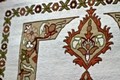
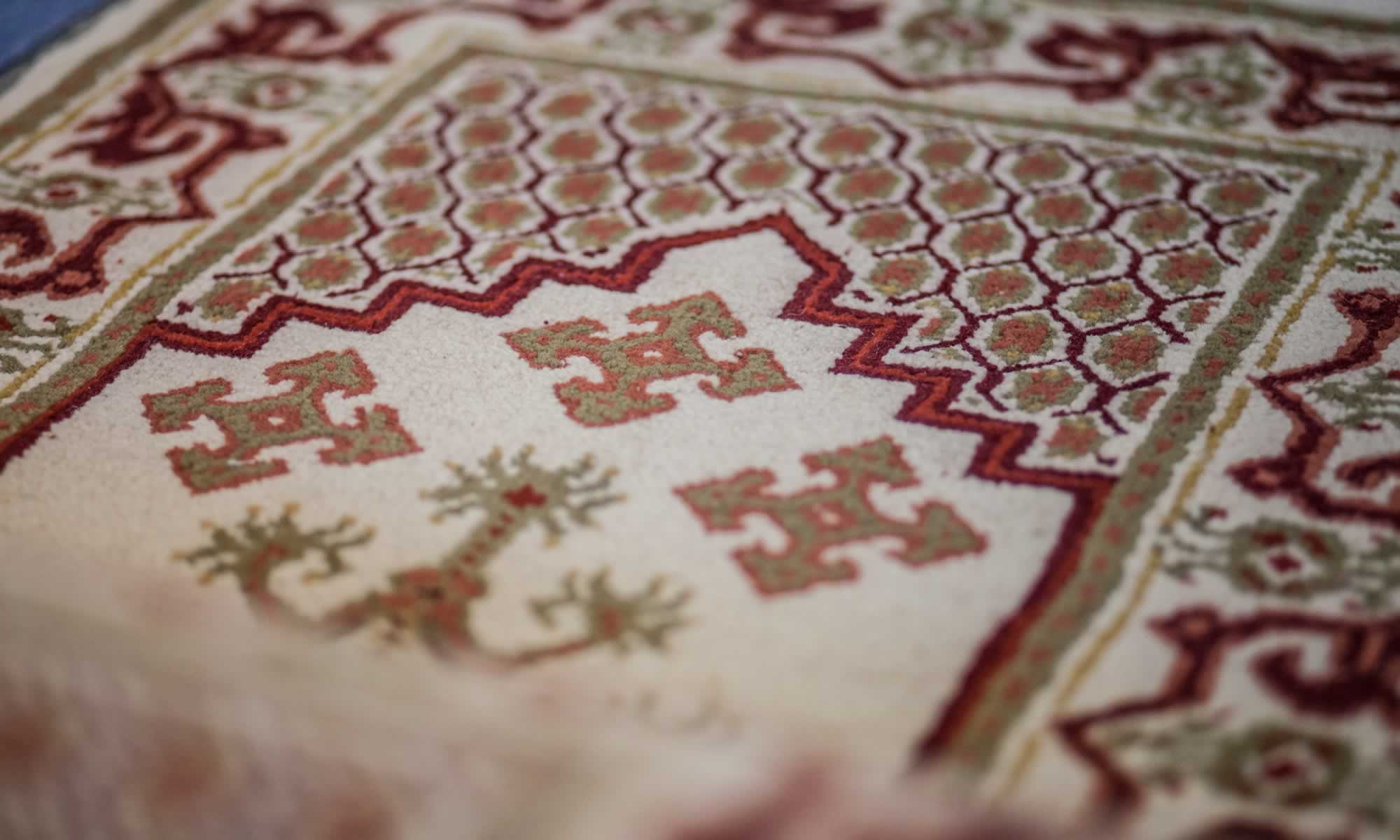
But in reality, carpet-weaving existed before; and today, knotted carpets are produced in all regions of Tunisia. Kairouan carpet has a generally hexagonal central field, spandrels strewn with stylized patterns and framing strips which alternate with geometric and floral motifs. Carpet production in Tunisia has developed with the improvement and diversification of the product that has undergone a real change in texture (number of points per m2).
Processing technologies and production of components (wool, linen, silk …), and aesthetics (composition, patterns, range …).
The fineness of Tunisian carpets blurs designs outline and gives them a molten aspect that characterizes them and which is the best effect when supported by a harmony of colors which Tunisian artisans have the secret.
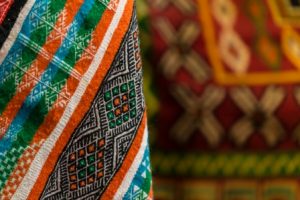
Klim
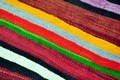
Klim is the weaving of wool made of solid parallel strips of different colors. It is used as wall hangings or as floor mats.
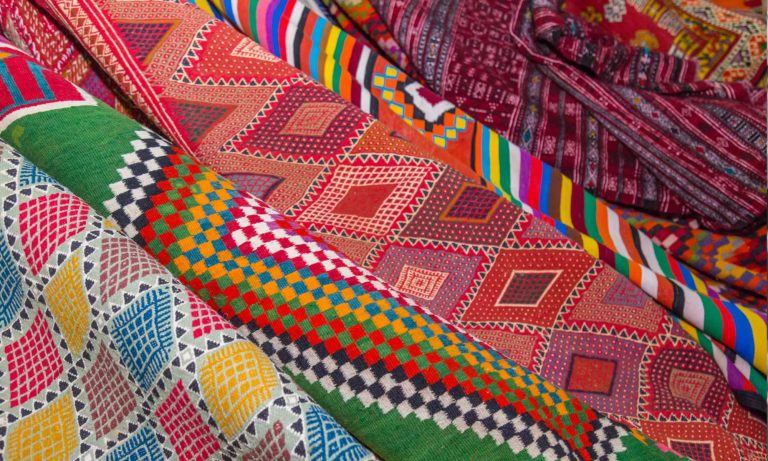
Mergoum
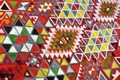
The Mergoum, another weaving wool used as floor mats stands out from the klim “Regma” or woven motifs that decorate it. There are intermediate weaving bands that combine with weaving ranges decorated with “Regma.” The most original is undoubtedly the Ouled Bou Saad klim, which combines longitudinal and transverse sets and comprises in the middle two juxtaposed richly decorated squares.
Different weaves, while maintaining their traditional appearance have diversified and enhanced by incorporating new colors and new graphics arising from the creative imagination of the artisan confronted with modernity and new needs.
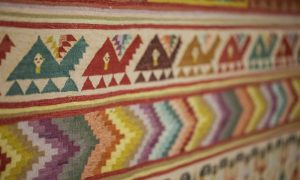
Tapestry
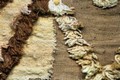
The tapestry arose from the artisans skills to transform sheep fleece into yarn resistant and colorful wool…
Living Raw materials, these wools are washed in pure water sources before being carded, spun and twisted. It takes several days and not less than seven operations to transform one kilometer from raw double wire wool of just less than a kilometer in length. It is therefore in the order of things that this tapestry knows until today an important commercial development.
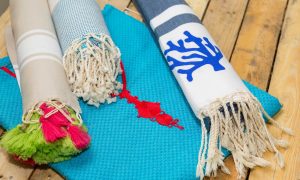 The Fouta
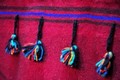
A fashion accessory that is increasingly invading our interiors. Revisited in 1000 ways, the fouta comes in several colors and with different patterns. Usually used in the hammam or at the beach, you can make a tablecloth, curtains, a bedspread or use it as a fabric for your cushions and beach dresses.