


Goldwork
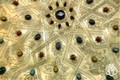
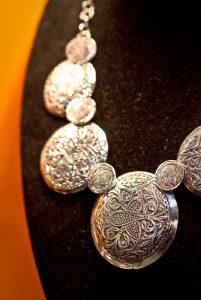
The history of the Tunisian jewelry traces its very roots to the beginnings of the Punic era from which it borrows several signs, symbols and forms that are found today in the current jewelry.This ancient craft has been enriched with various Roman, Byzantine, Arab, Turkish and Andalusian contributions that shaped Women’s adornment in different ways. Today, the long-held distinction between rural silver jewel and urban gold jewel has definitely faded. The variety of materials, the increase in production centers and the changing tastes stripped the jewelry its symbolic value to keep only its market value.
Certainly some regional differences still persist and suggest the origins of different ornaments, but they are no longer exclusive to artisans of a given region: wedding ornaments evolved with the institution whose ceremonial is increasingly desacralized.
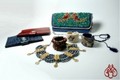
Rihanna, a large chain of flat gold rings. The Skhab, a gold, silver and amber chain. The Khomsas, the Kholkhals: ankle rings, fibulae, accessories for Melia, the Khellas…attest to the variety and richness of these peculiarities but gradually give way to the generation of popular jewelry: gold bracelets, diamond shaped inlay rings with semi-precious stones and enamels, modernized necklaces and European buckles. Currently, designers and artists invest the field of crafts and innovate offering a very modern jewelry.
 Coral jewelry
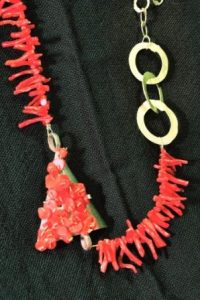
The beauty of the depth of the sea. Corals – organic gems that were worn in ancient times for decoration and protection against bewitchment. Now, corals are rare because of their color and are appreciated by jewelry lovers. Coral entered in the collars and trimmings mounting; it was used to garnish some parts as rosettes, temporal or diadems….
These creations are very successful. Tabarka offers several workshops that specialize in this area and give the jewel the desired forms: necklaces or regular bracelets beads, earrings and hand-shaped pendants, fish, grape clusters. And the result is always a fascinating beauty.
Silverware
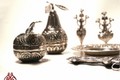
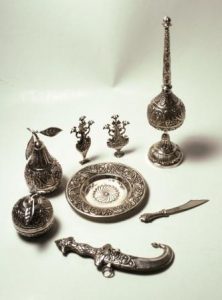
Unlike jewelry that evolves and loses its symbolic value, Tunisian silverware, even if it loses its functions, perpetuates the same objects and keep the same enthusiasm among customers :Luxury utensils, ornaments and accessories furnish and decorate modern interiors. The standard collection consists of a censer (Mabkhara) an asperger (mrech) of stylized compacts, combs, hoof, cabinets (Kanawita) and vanity mirrors.
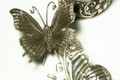
“Repoussé and filigree” Techniques compete in beauty and offer other menus objects to the admiration of collectors. This range widens increasingly to furniture, consoles, mirrors and chairs where the carpenter‘s art is requested.